alex nilsson
← back to work
making external programs work
At Curtsy, I shut down an external creator program because I couldn’t make it work. At Playkit, making it work was the whole job.


ugc campaigns
client communication
creator opperations
context
In June 2026 I joined Playkit, a creator marketing agency, as a UGC Engineer. That’s part campaign manager, part creative strategist. Brands came to us for one thing: creator content that turns into installs.
I ran campaigns for consumer apps: an audiobook app, a dog-walking app, a dating app, a digital closet app, a food scanner, and more. Often 3-4 at once, each with its own audience, goal, and founders to answer to.
Which meant I was running the exact kind of program I’d killed a year earlier.

the approach
I’d already done the hard part at Curtsy: I knew exactly why external programs fail. Creators aren’t embedded, briefs are too loose, oversight is minimal, and by the time you spot a problem, dozens more videos have gone out the same way.
None of those are creator problems. They’re system problems. So instead of hoping for better creators, I focused on building the structure around them, the kind internal teams get for free, and making it repeatable enough to run across multiple campaigns at once.
what I learned
I used to think the question was internal vs. external. Now I think it’s what you need right now.
If you need to find your voice, test fast, and build real product obsession, start internal. That’s what made Curtsy’s content team work. If you need to reach new audiences and find formats you’d never stumble on yourself, go external. That’s what Playkit’s clients came to us for. Neither one works on autopilot. Internal teams need room to experiment, and external creators need a clear brief, a fast feedback loop, and someone keeping everyone aligned with the actual goal.
Running both taught me how to pick the right one, and how to make either one work.
fixes: minimal oversight
the tracking system
Every video from every creator was tracked in Trackr: views, engagement, comments, and sentiment. I read the comments as closely as the view counts. On one campaign, a video pulled 508K views but almost no “what app is this?” comments, which told me the content was entertaining but not converting. We pivoted to product-forward storytelling the next week.
I also built AI-powered workflows on top of the data that turned it into weekly plans, client call prep, and campaign health check-ins automatically. Less time pulling numbers = more time to be creative.
the weekly revamp
fixes: slow feedback loops
At the end of each week, I pulled what worked and what flopped across every campaign and wrote the next week’s direction. Each revamp broke down the content mix by format, called out what to lean into and what to avoid, and handed creators a new hook bank to film from. Proven formats earned more of the mix, while new experiments got just enough room to prove themselves. When a hook took off, it was in every creator’s brief the next week. When something flopped, it was gone just as fast.
fixes: creators who aren’t embedded
the campaign accounts
Instead of posting to their personal feeds, every creator ran a dedicated account built for the campaign. That gave us control over the audience, the content mix, and the account’s health from day one. When accounts stalled, I built warm-up routines (engagement tasks across TikTok and Instagram before and during posting) to get them back into the algorithm.
the playbook
fixes: loose briefs
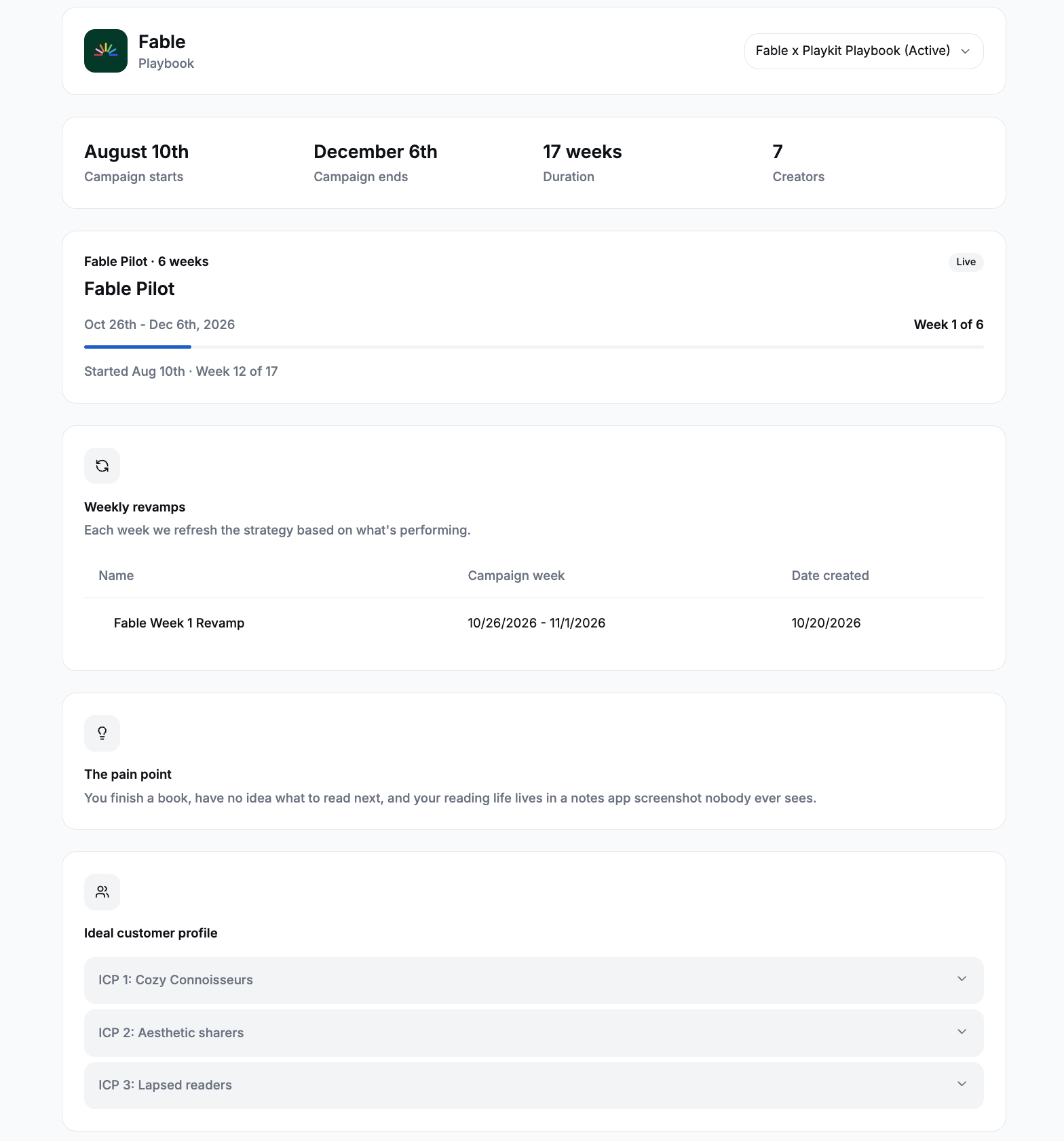
Every campaign launched with a full playbook: the client’s 2-3 goals, approved formats, hook banks, guardrails, and real examples of what good looks like. Creators weren’t guessing what the brand wanted. It was written down before they filmed a single video.
what I built
alex nilsson
← back to work
making external programs work
At Curtsy, I shut down an external creator program because I couldn’t make it work. At Playkit, making it work was the whole job.

ugc campaigns
client communication
creator opperations
context
In June 2026 I joined Playkit, a creator marketing agency, as a UGC Engineer. That’s part campaign manager, part creative strategist. Brands came to us for one thing: creator content that turns into installs.
I ran campaigns for consumer apps: an audiobook app, a dog-walking app, a dating app, a digital closet app, a food scanner, and more. Often 3-4 at once, each with its own audience, goal, and founders to answer to.
Which meant I was running the exact kind of program I’d killed a year earlier.

the approach
I’d already done the hard part at Curtsy: I knew exactly why external programs fail. Creators aren’t embedded, briefs are too loose, oversight is minimal, and by the time you spot a problem, dozens more videos have gone out the same way.
None of those are creator problems. They’re system problems. So instead of hoping for better creators, I focused on building the structure around them, the kind internal teams get for free, and making it repeatable enough to run across multiple campaigns at once.
what I learned
I used to think the question was internal vs. external. Now I think it’s what you need right now.
If you need to find your voice, test fast, and build real product obsession, start internal. That’s what made Curtsy’s content team work. If you need to reach new audiences and find formats you’d never stumble on yourself, go external. That’s what Playkit’s clients came to us for. Neither one works on autopilot. Internal teams need room to experiment, and external creators need a clear brief, a fast feedback loop, and someone keeping everyone aligned with the actual goal.
Running both taught me how to pick the right one, and how to make either one work.
the campaign accounts
fixes: creators who aren’t embedded
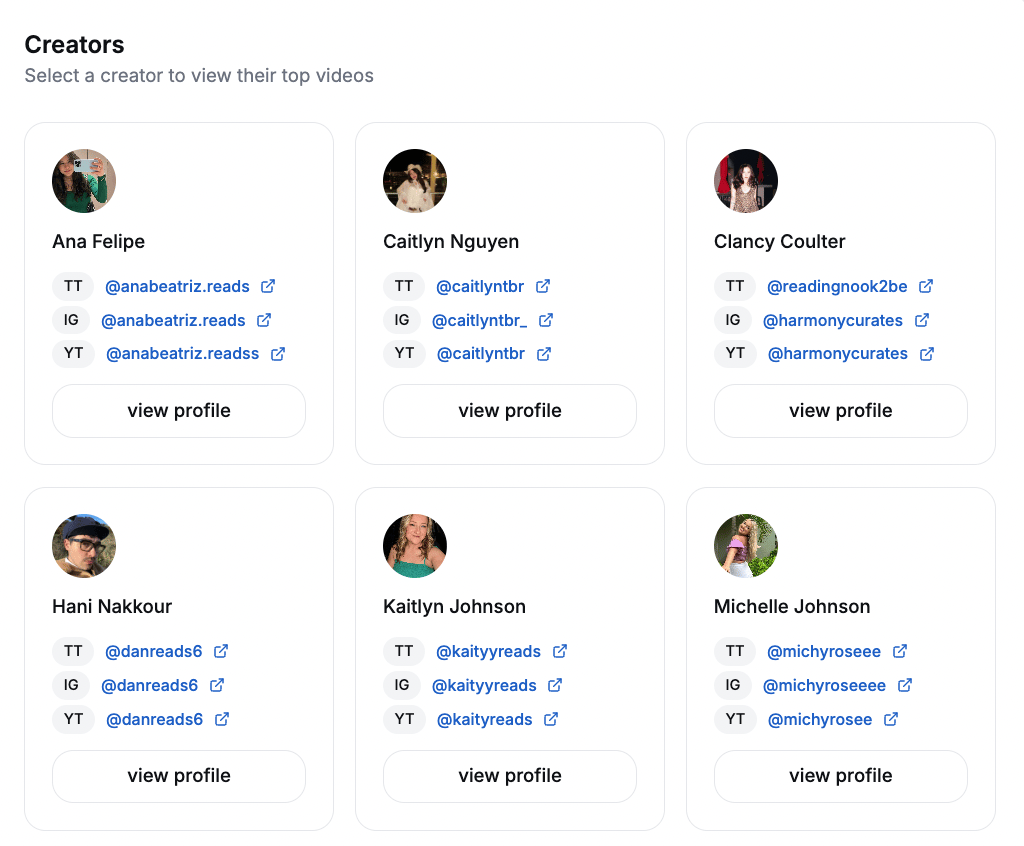
Instead of posting to their personal feeds, every creator ran a dedicated account built for the campaign. That gave us control over the audience, the content mix, and the account’s health from day one. When accounts stalled, I built warm-up routines (engagement tasks across TikTok and Instagram before and during posting) to get them back into the algorithm.
the tracking system
fixes: minimal oversight
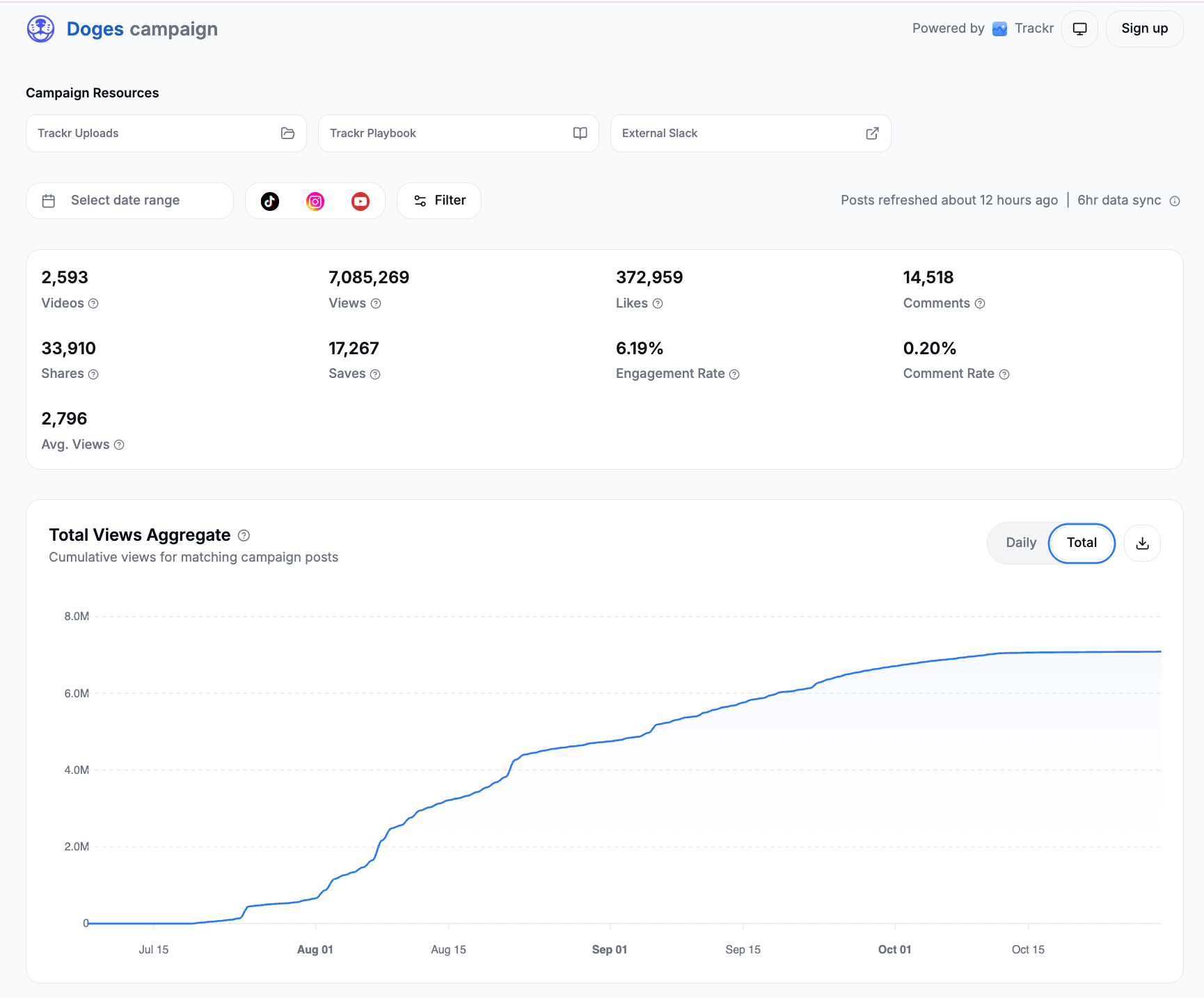
Every video from every creator was tracked in Trackr: views, engagement, comments, and sentiment. I read the comments as closely as the view counts. On one campaign, a video pulled 508K views but almost no “what app is this?” comments, which told me the content was entertaining but not converting. We pivoted to product-forward storytelling the next week.
I also built AI-powered workflows on top of the data that turned it into weekly plans, client call prep, and campaign health check-ins automatically. Less time pulling numbers = more time to be creative.
the weekly revamp
fixes: slow feedback loops
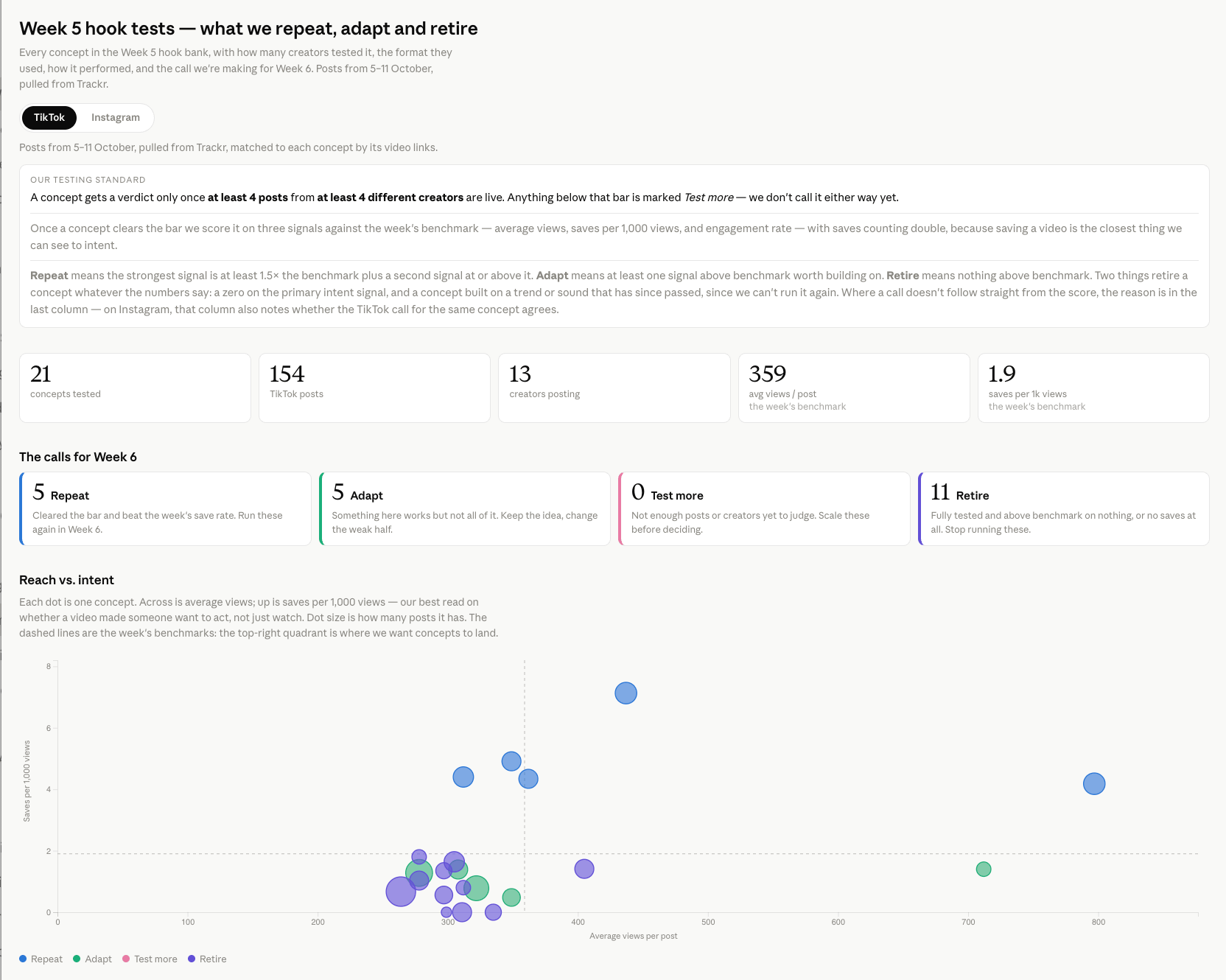
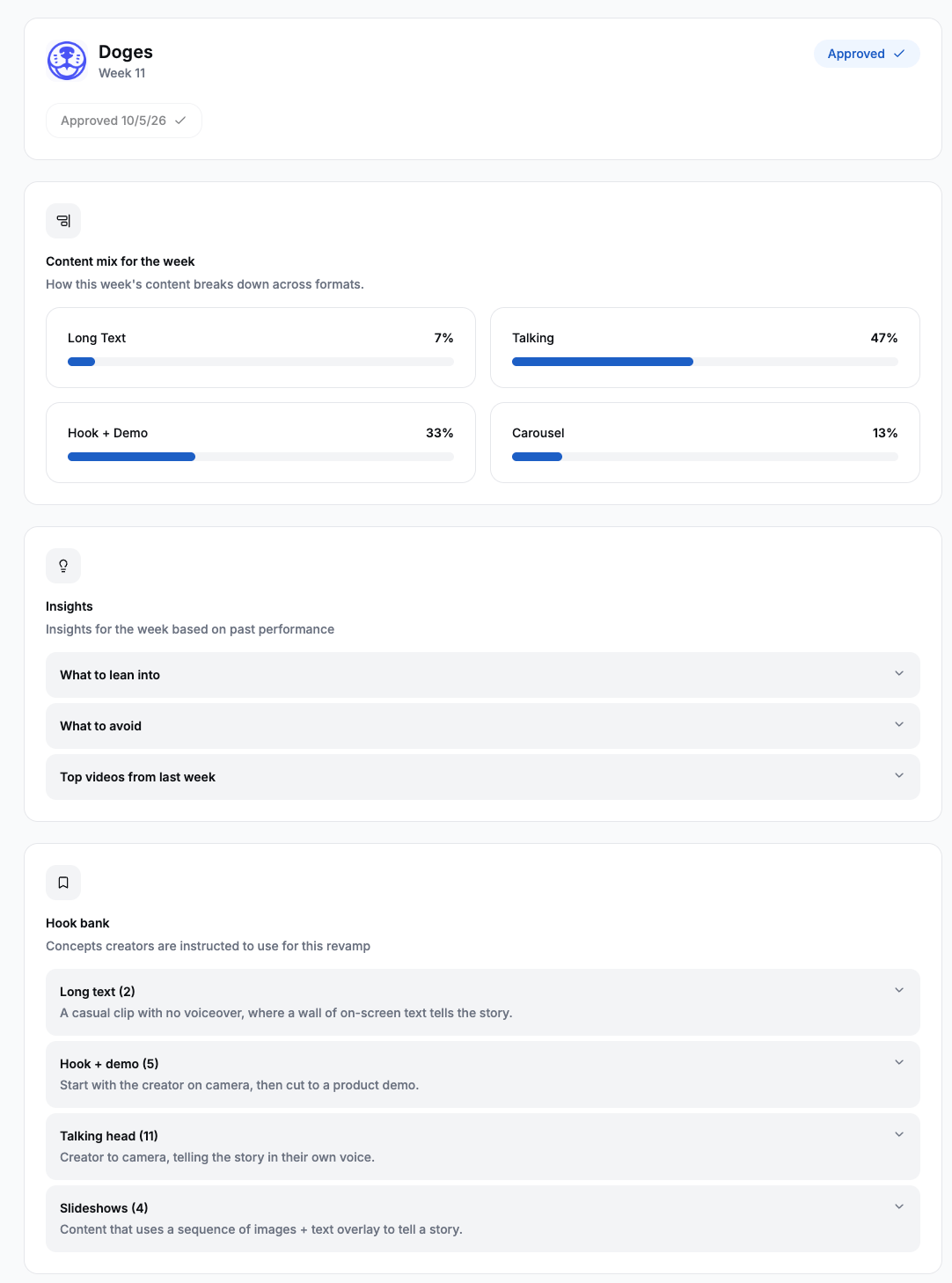
At the end of each week, I pulled what worked and what flopped across every campaign and wrote the next week’s direction. Each revamp broke down the content mix by format, called out what to lean into and what to avoid, and handed creators a new hook bank to film from. Proven formats earned more of the mix, while new experiments got just enough room to prove themselves. When a hook took off, it was in every creator’s brief the next week. When something flopped, it was gone just as fast.
the playbook
fixes: loose briefs
Every campaign launched with a full playbook: the client’s 2-3 goals, approved formats, hook banks, guardrails, and real examples of what good looks like. Creators weren’t guessing what the brand wanted. It was written down before they filmed a single video.
what I built
← back to work
making external programs work
At Curtsy, I shut down an external creator program because I couldn’t make it work. At Playkit, making it work was the whole job.

ugc campaigns
client communication
creator opperations
context
In June 2026 I joined Playkit, a creator marketing agency, as a UGC Engineer. That’s part campaign manager, part creative strategist. Brands came to us for one thing: creator content that turns into installs.
I ran campaigns for consumer apps: an audiobook app, a dog-walking app, a dating app, a digital closet app, a food scanner, and more. Often 3-4 at once, each with its own audience, goal, and founders to answer to.
Which meant I was running the exact kind of program I’d killed a year earlier.

the approach
I’d already done the hard part at Curtsy: I knew exactly why external programs fail. Creators aren’t embedded, briefs are too loose, oversight is minimal, and by the time you spot a problem, dozens more videos have gone out the same way.
None of those are creator problems. They’re system problems. So instead of hoping for better creators, I focused on building the structure around them, the kind internal teams get for free, and making it repeatable enough to run across multiple campaigns at once.
what I learned
I used to think the question was internal vs. external. Now I think it’s what you need right now.
If you need to find your voice, test fast, and build real product obsession, start internal. That’s what made Curtsy’s content team work. If you need to reach new audiences and find formats you’d never stumble on yourself, go external. That’s what Playkit’s clients came to us for. Neither one works on autopilot. Internal teams need room to experiment, and external creators need a clear brief, a fast feedback loop, and someone keeping everyone aligned with the actual goal.
Running both taught me how to pick the right one, and how to make either one work.
the tracking system
fixes: minimal oversight
Every video from every creator was tracked in Trackr: views, engagement, comments, and sentiment. I read the comments as closely as the view counts. On one campaign, a video pulled 508K views but almost no “what app is this?” comments, which told me the content was entertaining but not converting. We pivoted to product-forward storytelling the next week.
I also built AI-powered workflows on top of the data that turned it into weekly plans, client call prep, and campaign health check-ins automatically. Less time pulling numbers = more time to be creative.
hover to enlarge
hover to enlarge
the weekly revamp
fixes: slow feedback loops
At the end of each week, I pulled what worked and what flopped across every campaign and wrote the next week’s direction. Each revamp broke down the content mix by format, called out what to lean into and what to avoid, and handed creators a new hook bank to film from. Proven formats earned more of the mix, while new experiments got just enough room to prove themselves. When a hook took off, it was in every creator’s brief the next week. When something flopped, it was gone just as fast.
hover to enlarge
hover to enlarge
the campaign accounts
fixes: creators who aren’t embedded
Instead of posting to their personal feeds, every creator ran a dedicated account built for the campaign. That gave us control over the audience, the content mix, and the account’s health from day one. When accounts stalled, I built warm-up routines (engagement tasks across TikTok and Instagram before and during posting) to get them back into the algorithm.
the playbook
fixes: loose briefs
Every campaign launched with a full playbook: the client’s 2-3 goals, approved formats, hook banks, guardrails, and real examples of what good looks like. Creators weren’t guessing what the brand wanted. It was written down before they filmed a single video.
hover to enlarge
what I built